
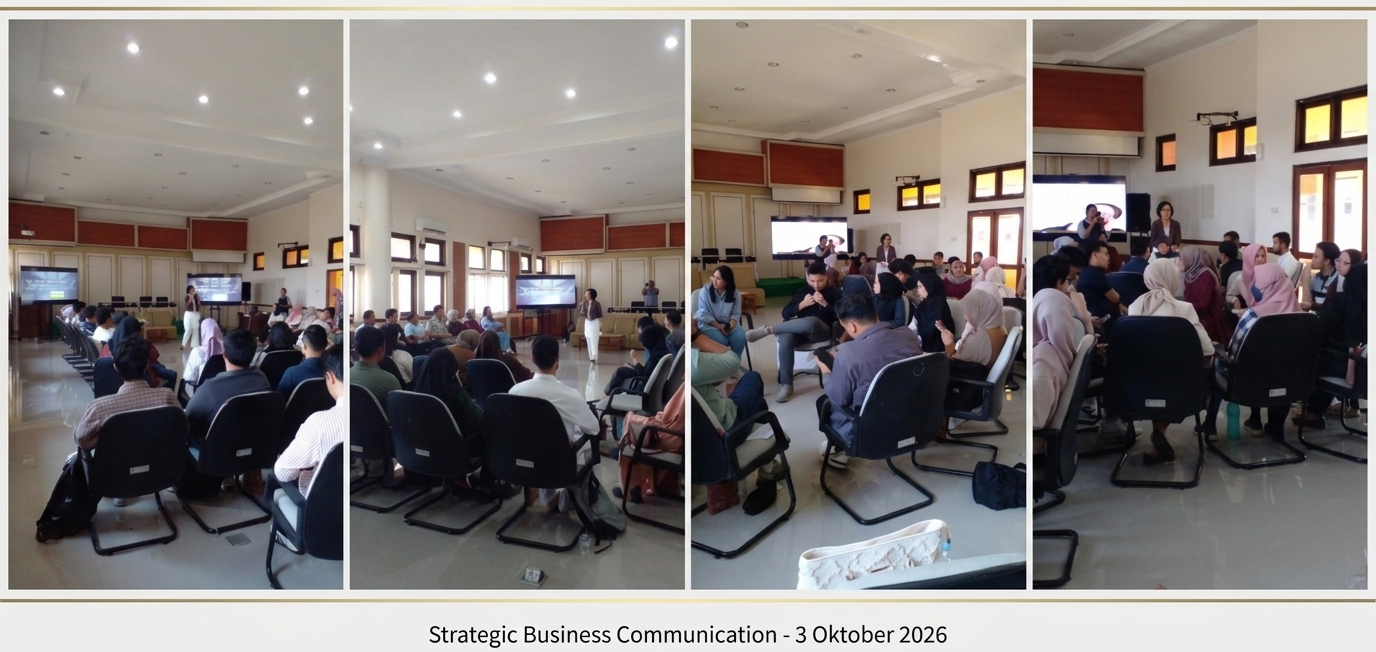
SEMARANG, OCTOBER 3, 2026 – The Soft Competence Lecture Series of the Master of Management Study Program, Faculty of Economics and Business, Diponegoro University (MM FEB UNDIP) continued into its second day on Saturday, October 3, 2026, held at the Prof. Soewito Room, 4th Floor of the MM UNDIP Building. The 3-hour second session focused on the main topic “Strategic Business Communication” (The Art of Strategic Communication) and was delivered directly by Ms. Bonita D. Sempurno, S.H.
Starting at 12:30 PM WIB, Ms. Bonita elaborated on the importance of integrating professional communication to build influence in the modern working environment. During her presentation, she cited Albert Mehrabian’s law of communication regarding the proportions of verbal and non-verbal communication: 55% Visual (body language), 38% Vocal (tone of voice), and 7% Verbal (words).
Key strategic points learned by the students during this training included:
- The Art of Strategic Communication: Understanding that effective business communication strategies always stem from strong personal communication skills.
- Non-Verbal Messages & Body Language: The importance of facial expressions, eye contact, standing posture, and open hand gestures to convey openness and confidence (World Class Communicator).
- Recognizing Personality Types: Techniques for engaging with four main personality types in the workplace—Dominant (Kuasa), Social/Expressive (Gaul), Amiable (Harmoni), and Analytical (Pemikir)—to align communication approaches effectively.
- Rapport Building Techniques: Applying the Pacing & Leading approach (Mirror, Match, Lead / TSP) and building a positive atmosphere through smiling and discovering shared interests.
- Public Speaking Techniques & The BASSS Formula: A systematic, easy-to-remember presentation structure using the BASSS formula (Buka/Introduction, Alasan/Fundamental Reason, Solusi/Solution, Sistematika/Implementation, and Simpulan/Conclusion), complemented by vocal control techniques known as JAP (Jeda/Pause, Artikulasi/Articulation, Penekanan/Emphasis).
Through the second-day session on October 3, 2026, participants were equipped with active listening skills to understand the needs of their counterparts, build mental confidence, and sharpen the impact of their professional communication in the business world