
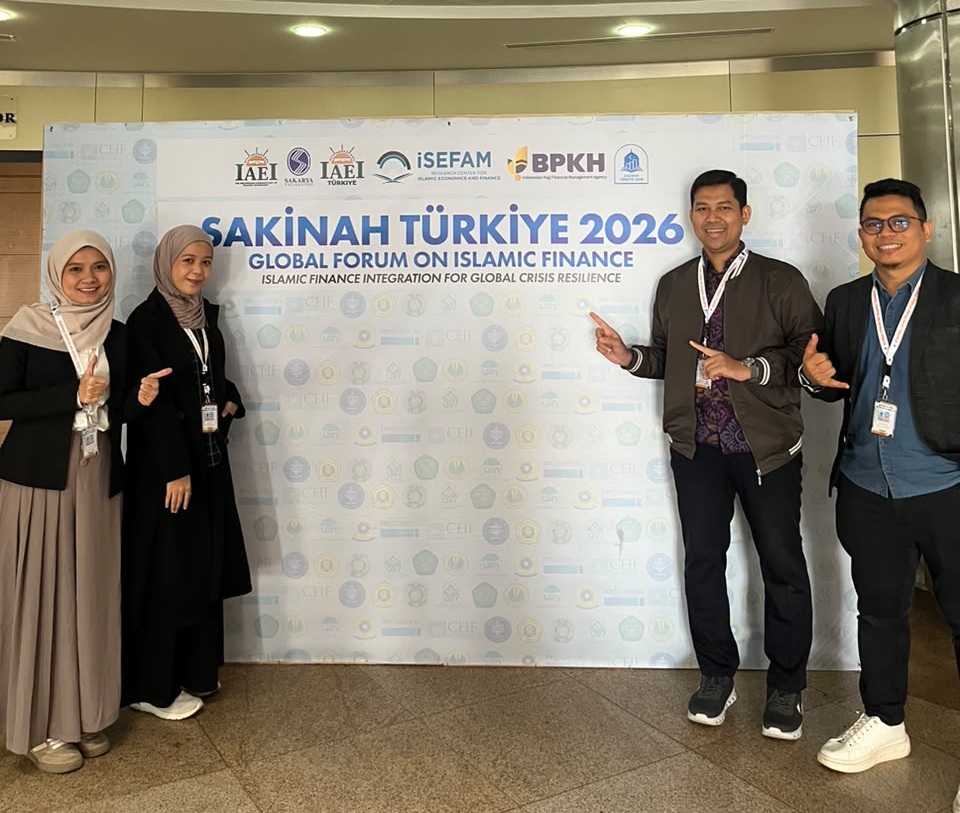
Sakarya, Türkiye – Shinta Amrina Rosadha, a student of the Master of Management Program, Faculty of Economics and Business (FEB), Universitas Diponegoro (UNDIP), participated as a presenter at SAKINAH Türkiye 2026 – Global Forum on Islamic Finance, held on October 26–28, 2026, at Sakarya University, Türkiye. Her participation was part of the Students Go International (SGI) Program, supported by the World Class University (WCU) funding scheme of the Faculty of Economics and Business, Universitas Diponegoro.
The international academic forum, organized by IAEI Türkiye in collaboration with the Department of Islamic Economics and Finance at Sakarya University (iSEFAM), carried the theme “Islamic Finance Integration for Global Resilience and Crisis Hedging.” The event served as a platform for knowledge exchange and the development of academic collaborations, bringing together academics, researchers, practitioners, and participants from various countries to discuss Islamic finance and the halal industry.
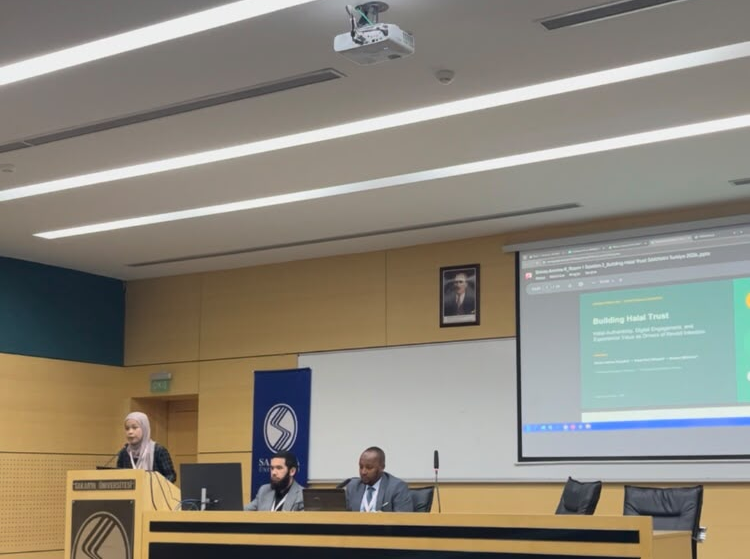
Shinta Amrina Rosadha, Master of Management Student, Faculty of Economics and Business, Universitas Diponegoro.
On this occasion, Shinta presented her research entitled “Building Halal Trust: Halal Authenticity, Digital Engagement, and Experiential Value as Drivers of Revisit Intention” (Paper ID: ST2026-026). The study was conducted through an academic collaboration between Shinta Amrina Rosadha and Shabira Maharani, a faculty member of the Department of Management, Faculty of Economics and Business, Universitas Diponegoro.
The research examines how Perceived Halal Authenticity, Digital Customer Engagement, and Experiential Value contribute to building Halal Trust and influencing Revisit Intention among consumers in the halal industry.
This empirical study focuses on Generation Z consumers who have visited halal-certified coffee shops in Semarang City, Indonesia. It highlights the importance of fostering consumer trust through halal authenticity, digital engagement, and customer experience. These factors serve as strategic elements in understanding consumer behavior and encouraging revisit intention within the growing halal industry.
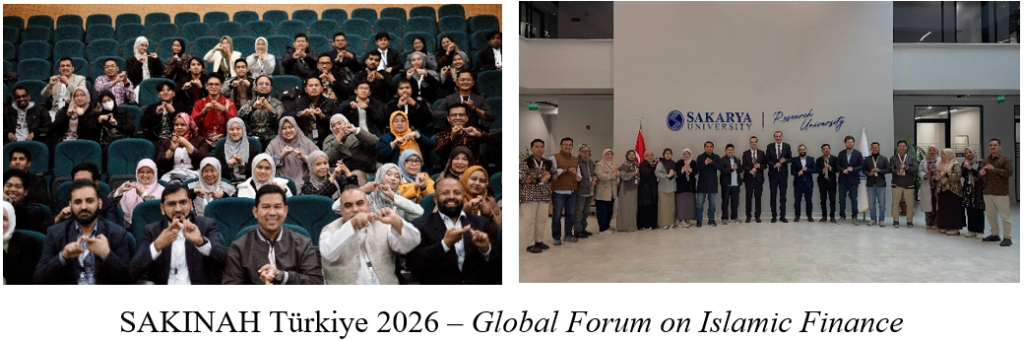
In addition to presenting her research findings, participation in the forum provided Shinta with valuable opportunities to engage in academic discussions, receive scholarly feedback, exchange perspectives, and expand her professional network with international academics and researchers. This experience served as an important learning platform, broadening her understanding of developments in Islamic finance, the halal ecosystem, and the evolving landscape of global research.
Shinta’s participation in SAKINAH Türkiye 2026 represents one of Universitas Diponegoro’s contributions to expanding students’ international academic exposure through research dissemination. Through the support of the SGI-WCU Program, Universitas Diponegoro continues to encourage students to enhance their academic capabilities, improve research quality, and establish cross-border collaborative networks. These initiatives are part of the university’s ongoing commitment to strengthening its reputation as a research-oriented institution with global competitiveness.